

Forensic Voice Analysis Software: 10 Tools for 2026

A newsroom receives a short phone recording. The voice sounds familiar, but the clip is noisy, compressed, and possibly edited. The team needs to know which question comes first: Can the words be made intelligible? Was the file manipulated? Does the voice resemble a known speaker? Or does the recording contain synthetic speech?
Those questions require different tools. Automatic speaker recognition compares voices using statistical models. Forensic enhancement improves audibility without turning restoration into proof. Phonetic analysis gives an expert measurable acoustic features, while authenticity checking examines manipulation, tampering, or synthetic-generation signals. Treating every audio editor as a speaker-identification system creates avoidable evidential risk.
This roundup compares ten options by forensic job, not by generic editing features. The practical criteria are evidence handling, outputs, training requirements, licensing, reporting, deployment fit, and known limitations. For video investigations, AI Video Detector is a relevant adjacent option because its audio-forensics module works alongside frame-level, temporal, and metadata checks. It complements specialist voice-comparison software rather than replacing it.
1. Phonexia Voice Inspector VIN
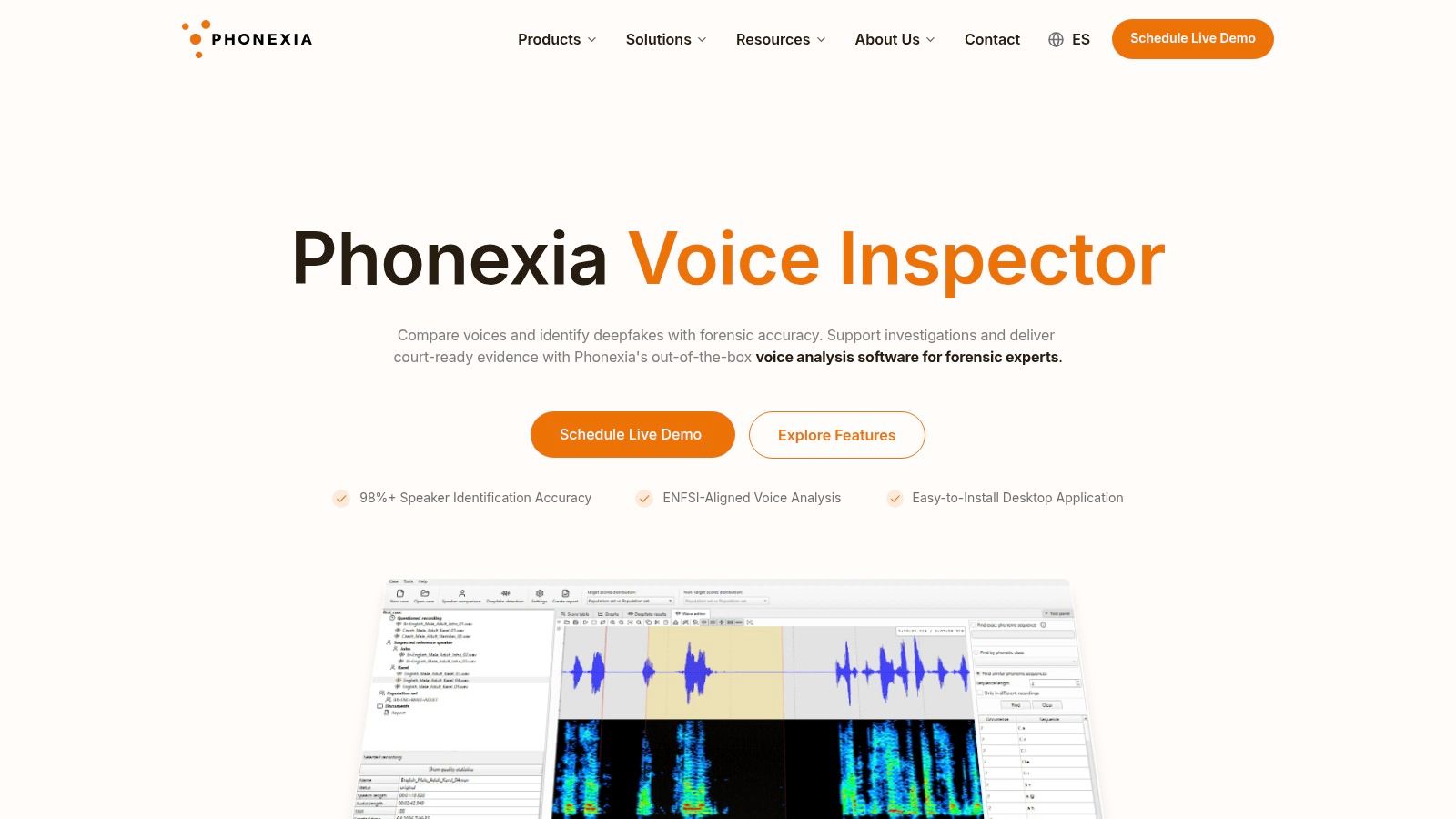
Phonexia Voice Inspector is built for laboratories and investigative teams that need automatic speaker recognition within a forensic workflow. Its focus is not just identifying a voice in a searchable archive. The system supports speaker comparison, likelihood-ratio style outputs, interpretation guidance aligned with forensic practice, and reporting designed for case documentation.
The inclusion of an integrated deepfake module gives VIN a broader role than a conventional speaker-recognition product. Investigators can assess whether a recording appears bona fide or synthetic, then keep that result alongside the speaker-comparison work rather than sending the audio through unrelated tools. That separation matters because speaker similarity and recording authenticity are different propositions.
Best fit and limitations
VIN makes the strongest case for teams that need a dedicated forensic interface, court-oriented reporting, and automated comparison in one environment. Its enterprise licensing means buyers should expect a sales-led procurement process rather than a casual download. Reliable comparison also depends on having representative enrollment and comparison audio, since a model can't compensate for a badly matched or inadequate reference sample.
The field's history explains why buyers should ask how the vendor validates its systems. Early forensic speech work relied heavily on manual acoustic inspection, and historical literature reports examiner error rates of 5–15% in early work, as documented in the forensic phonetics tutorial by Eriksson. Modern automation changes the workflow, but it doesn't remove the need for qualified interpretation.
For a deeper explanation of the limits behind accuracy claims, see forensic voice analysis accuracy.
2. Oxford Wave Research VOCALISE
Oxford Wave Research VOCALISE is aimed at forensic practitioners who need research-led automatic speaker comparison, rather than a general biometric search product. Its DNN and x-vector approach uses PLDA scoring and supports likelihood-ratio outputs, giving laboratories a framework for expressing evidential weight instead of presenting a bare “match” label.
That distinction is central. A forensic comparison normally asks how much more probable the evidence is under competing propositions, not whether software has declared an identity. VOCALISE's practitioner-oriented interface and casework examples help place the output inside that reasoning process, although the user still needs specialist competence in likelihood-ratio interpretation.
Why research depth matters
VOCALISE suits organizations that value published evaluation, academic integration, and a workflow designed around forensic speech science. It isn't the natural choice for a newsroom that only needs to remove background noise from a recording. Nor is it a tool that makes expert interpretation optional.
Benchmark results show why procurement teams should examine test conditions closely. One multi-laboratory evaluation reported a top Gaussian-mixture system at 7.0% EER, while a deep neural network x-vector system reached 2.2% EER, according to the forensic voice comparison evaluation published in PMC. Earlier testing on non-contemporaneous spontaneous speech reported a best verification EER of 13.8%, showing that performance depends heavily on the relationship between the questioned and reference recordings.
Practical rule: Treat an LR as an evidential output that requires a validated proposition, representative samples, and expert explanation. It isn't a courtroom-ready identity verdict by itself.
Quote-based licensing and training requirements may make VOCALISE a better fit for a forensic laboratory than a small investigative team. Its value lies in disciplined comparison, not quick audio cleanup.
3. CEDAR Cambridge and Forensic Enhance
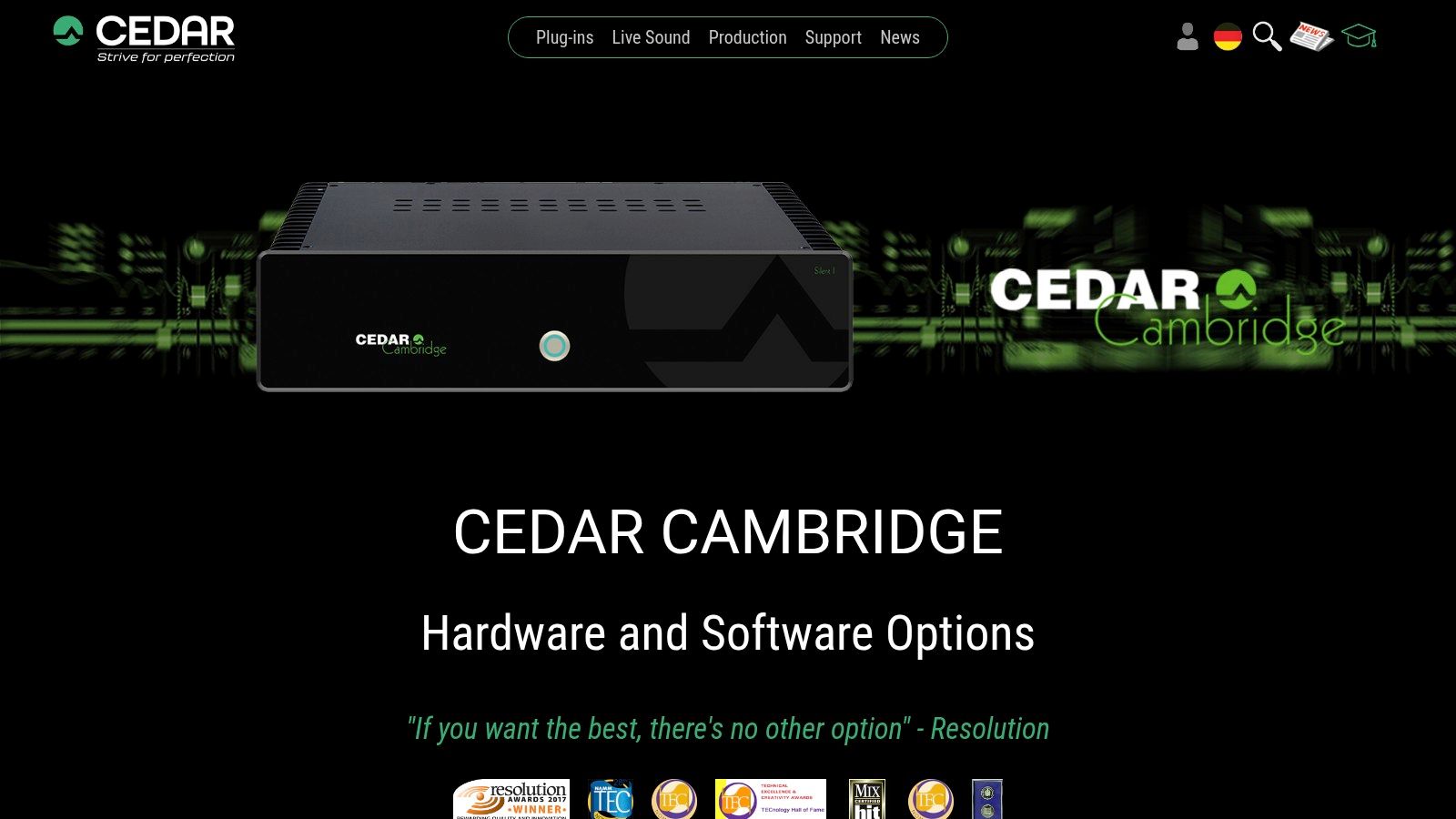
CEDAR Cambridge belongs in a different category from VIN and VOCALISE. It is primarily a forensic audio enhancement and restoration environment, designed to help analysts improve intelligibility, suppress noise, process dialogue, and manage demanding evidential workflows. It shouldn't be selected as an automatic speaker-identification system.
Its Forensic Enhance and related modules are suited to organizations that process recordings from intelligence, security, and law-enforcement sources. Batch processing and background workflows are useful when a lab must apply repeatable operations across many files. Reporting and evidence-conscious processing also help analysts show what they changed and why.
Enhancement isn't authentication
The most important operational boundary is simple: making speech easier to hear doesn't prove that the restored signal is authentic. Noise suppression can improve intelligibility, but aggressive processing may also alter acoustic details relevant to later phonetic or speaker-comparison work. A careful lab therefore preserves the original, documents each processing step, and treats the enhanced version as a derived working copy.
CEDAR is strongest where an organization needs mature, high-end processing and support for government or law-enforcement deployments. The tradeoff is procurement complexity. Hardware and software bundles may be supplied through integrators, and pricing is positioned at the premium end of the market.
Teams assessing the wider category can use this audio forensics software guide to separate enhancement, authentication, and detection tasks before buying.
CEDAR won't replace a specialist voice-comparison engine or a phonetic expert. It can, however, provide the controlled restoration stage that makes later analysis more practical, provided the original evidence remains untouched and the analyst documents the processing chain.
4. iZotope RX Advanced
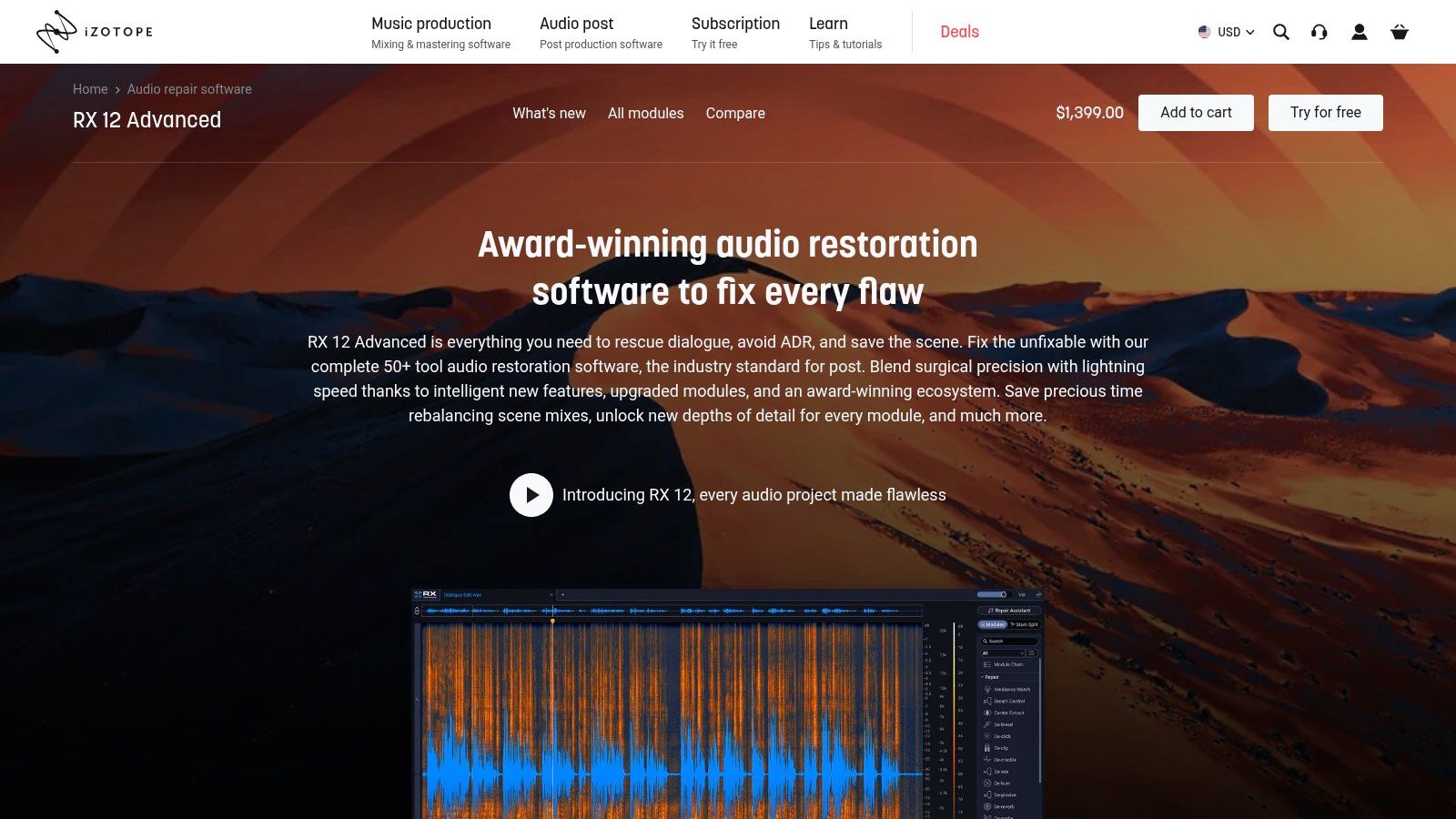
iZotope RX Advanced is a powerful choice for audio repair, spectral inspection, and dialogue enhancement. Its Spectral Repair and Spectral Editor tools let an analyst work on visible frequency regions, while Dialogue Isolate, de-noise, de-reverb, and related modules address common problems in speech recordings.
RX's broad adoption is an advantage for teams that need accessible training resources and staff familiarity. It can function as a standalone editor or within plugin-based workflows, and its edit history supports a more transparent account of how a working copy was produced. That makes it practical for newsrooms, investigative teams, and laboratories that need fast cleanup before human review.
Where RX stops
RX Advanced isn't an automatic speaker-recognition or biometric comparison system. It can reveal spectral structure and make speech more intelligible, but it doesn't provide a validated likelihood-ratio comparison between a questioned and known speaker. Analysts should avoid treating a cleaned clip as a stronger identification just because it sounds clearer.
It also has an important workflow risk. Restoration tools can create convincing audio that no longer represents the untouched signal. The right process is to retain the original file, export a documented derivative, and record the settings and operator decisions. If later speaker comparison or phonetic measurement is required, the analyst should explain whether the enhancement could affect those features.
For synthetic-speech questions, RX can support inspection, but it shouldn't be treated as conclusive deepfake detection. Deepfake audio detection guidance is useful for understanding why spectral anomalies, temporal behavior, and recording conditions need to be considered together.
RX is a strong general-purpose restoration layer. It becomes a poor purchase when a buyer needs speaker recognition, formal forensic interpretation, or a dedicated authenticity workflow.
5. Steinberg SpectraLayers Pro
Steinberg SpectraLayers Pro approaches forensic audio from the perspective of granular spectral editing. Its layer-based design lets analysts isolate, remove, or inspect sounds in ways that are difficult to reproduce with a conventional waveform editor. AI-assisted unmixing and spectral selection can help separate overlapping material, while detailed visualizations support close examination of audio artifacts.
This makes SpectraLayers particularly useful when the evidence contains competing sounds. An investigator may need to inspect speech beneath an interfering source, remove a narrow spectral event, or compare the effect of different restoration choices. The layer model also encourages analysts to keep operations conceptually separate rather than flattening every decision into one destructive edit.
A specialist editor, not a voice matcher
SpectraLayers complements tools such as RX, but it doesn't provide automatic speaker identification or forensic biometric comparison. Its value comes from control over the signal, not from an identity score. That distinction should appear in the procurement brief, especially when a buyer is comparing audio editors with speaker-recognition platforms.
The learning curve is significant. Precise spectral work requires an analyst who understands what a visual pattern represents and how an edit may affect speech acoustics. AI-assisted separation can accelerate experimentation, but it doesn't turn the result into original evidence or remove the need for human review.
Perpetual licensing options available through professional audio retailers may appeal to organizations that prefer a non-subscription route. Still, the software budget is only one part of the decision. Training, documentation, storage of original and processed files, and review by a qualified examiner all affect whether the tool fits a defensible workflow.
SpectraLayers is a good choice for surgical restoration and inspection. It isn't the right answer to the question, “How strongly does this recording support the proposition that the speaker is person A?”
6. Adobe Audition
Adobe Audition is a practical option for newsroom triage, investigative cleanup, and audio-video production workflows. Its Spectral Frequency Display supports visual inspection, selection, and healing, while noise reduction, de-reverb, and batch tools help teams process recordings without adopting a specialist forensic laboratory platform.
Audition's strongest advantage is deployment familiarity. Journalists, investigators, and video teams may already understand the Creative Cloud environment, and its integration with Premiere Pro helps when the evidence includes both a soundtrack and visual material. Tutorials and a large user community can shorten the initial training period.
Appropriate uses
Audition works well for:
- Initial triage: Identify whether speech is present, locate difficult sections, and prepare a working copy for review.
- Production cleanup: Improve intelligibility for a documentary, report, or internal investigation while retaining the unprocessed source.
- Batch preparation: Apply consistent operations to a group of files before specialist examination.
It isn't designed for likelihood-ratio voice comparison or automatic speaker recognition. It also rewards discipline. Waveform edits can become destructive if an operator overwrites the source or fails to preserve a clear edit history.
That makes Audition a sensible budget and workflow choice for teams whose primary need is editing and inspection. A forensic laboratory seeking validated speaker comparison, formal authenticity assessment, or specialist phonetic measurement will need additional tools and expertise.
The software can help an investigator hear what was previously obscured. It can't establish that a speaker is genuine, identify a person with forensic weight, or prove that an edited recording accurately represents the original without supporting examination.
7. Acon Digital Acoustica Premium and Ultimate
Acon Digital Acoustica offers a capable middle ground for teams that need spectral editing and machine-learning restoration without a premium forensic suite. Its DeClip, DeHum, and DeNoise modules address common recording defects, while dialogue-focused tools and spectral workflows support investigative cleanup.
Premium also supports ARA2 integration for DAW workflows, which can matter to organizations already working inside a broader audio environment. The product's price-to-capability positioning and frequent promotions make it attractive for smaller teams, freelance investigators, and mixed toolchains that use a specialist editor for selected tasks rather than every operation.
Budget fit and evidence discipline
Acoustica is best understood as a restoration complement, not as forensic speaker-recognition software. It doesn't supply a dedicated biometric comparison workflow, and it has fewer forensic-laboratory features than high-end platforms. Buyers should therefore assess whether they need reportable forensic measurements, chain-of-custody support, or merely a reliable way to expose speech and prepare files for expert examination.
Machine-learning cleanup can be useful, but analysts should compare the processed output with the original and avoid assuming that a more intelligible signal is a more accurate signal. If an edit removes background material that later becomes relevant to authenticity or context, the team needs the original and an auditable account of the change.
Acoustica makes sense when licensing cost, practical restoration, and integration matter more than a purpose-built forensic interface. It can fill a real operational gap, but it shouldn't be marketed internally as a replacement for a trained forensic examiner or a validated speaker-comparison platform.
8. Diamond Cut Forensics Audio Laboratory
Diamond Cut Forensics Audio Laboratory is designed around recognizable forensic tasks rather than general music production. Its feature set includes voice-printing and formant analysis, long-recording handling, authentication and edit-detection aids, tamper checks, and reportable measurement tools.
That combination gives DCForensics a broader forensic identity than a standard DAW. An investigator can move from recording inspection to enhancement and measurement within an interface shaped around common casework goals. Its perpetual licensing model and mid-tier positioning may appeal to practitioners who want dedicated forensic functions without a premium hardware-and-integrator purchase.
A measured choice
The product's limitations deserve equal weight. Its interface and algorithms are less modern than those of top-tier suites, and its validation footprint is more limited than that of academic speaker-recognition systems. A buyer should ask which outputs are intended for exploratory analysis, which are suitable for expert reporting, and what independent validation supports the relevant method.
Voice-printing and formant analysis can contribute to an examination, but labels such as “voice print” may encourage overconfidence if users treat them as unique identity signatures. Human voices vary with channel, health, speaking style, language, and recording conditions. The software's measurements need qualified interpretation and case-specific documentation.
DCForensics is therefore a reasonable option for forensic enhancement, authentication aids, and reportable acoustic inspection, especially where perpetual licensing matters. It isn't the clearest choice for a laboratory that wants a research-heavy likelihood-ratio speaker-comparison system.
9. Cube-Tec Foenics
Cube-Tec Foenics is an integrated forensic audio and speech-analysis package developed with a law-enforcement orientation. It combines speech enhancement and restoration with recording-authenticity and tamper-examination functions, placing more of the evidence workflow inside one environment than a generic DAW and plugin combination.
That integration can be valuable for laboratories that want a controlled path from intake to examination. The system is designed to work with Cube-Tec workflows and hardware where required, so procurement should cover the full deployment model rather than evaluating the application as an isolated desktop editor.
Who should consider it
Foenics suits forensic organizations that prefer a purpose-built package with European law-enforcement heritage and a focus on evidence processing. It can help teams coordinate intelligibility work and authenticity checks without assembling a toolchain from unrelated products.
The tradeoff is availability and procurement friction. Pricing and distribution are quote-based, and the product is less common in United States laboratories than several better-known commercial suites. That doesn't make it unsuitable, but it does make local support, training, export formats, and interoperability important questions before purchase.
Foenics should not be confused with a general automatic speaker-recognition platform. Its strength is integrated forensic audio handling, restoration, and authenticity examination. If the case question is whether two recordings provide statistical support for the same-speaker proposition, a specialist comparison system such as VIN or VOCALISE remains a more direct fit.
10. Praat
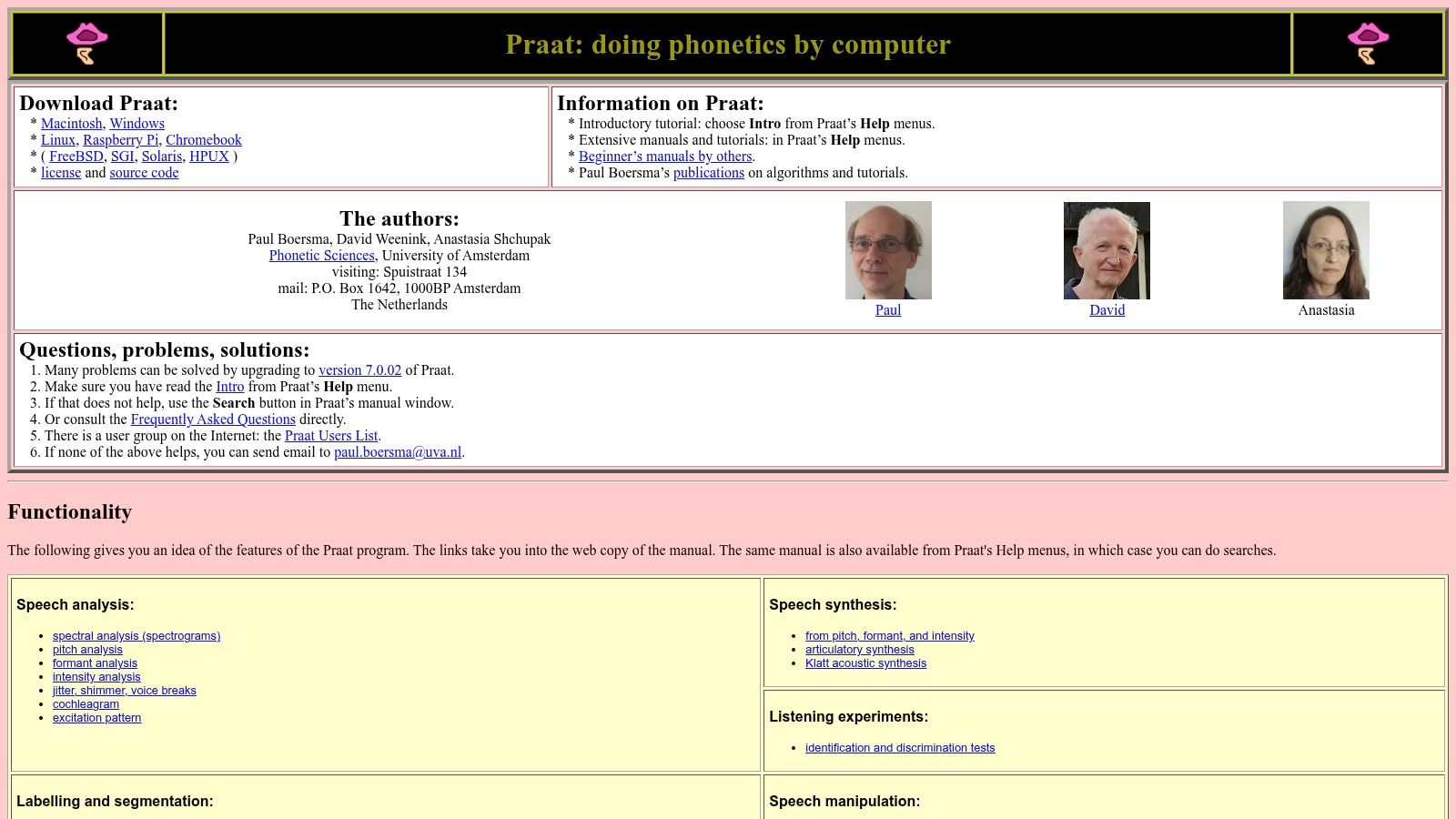
Praat is free, extensible, and widely used for specialist phonetic analysis. It lets an expert inspect spectrograms, measure formants, examine fundamental frequency and duration, assess voice quality, and build scripts for repeatable workflows. Those capabilities make it valuable when the question concerns how speech was produced acoustically, rather than whether a black-box system has found a matching identity.
Praat's transparency is its main forensic advantage. An analyst can define measurements, inspect the underlying signal, document settings, and script repeated operations. That supports a methodology that another qualified examiner can review. The software also has a substantial academic ecosystem and published baseline methods.
Expertise is part of the tool
Praat has no automatic speaker-recognition function. It won't independently establish identity, and its measurements can be misinterpreted without specialist phonetic knowledge. Formants, F0, timing, and voice-quality features are affected by speech content, recording channel, linguistic background, and the speaker's condition.
That limitation is also why Praat remains useful. The examiner controls the question, the measurement design, and the interpretation instead of delegating the entire conclusion to a vendor score. Forensic speech work still needs validation, representative material, and an explanation of uncertainty.
Independent reviews emphasize the gap between controlled benchmarks and real cases. One cited Australian-English dataset spans 3,899 speakers, while an evaluation reported accuracy as low as 62% on the full set compared with 85% on a reduced 985-sample subset, as described in the review and evaluation report. The result is a warning about dataset design, channel conditions, and calibration, not a universal performance rate for Praat.
Forensic Voice Analysis: Top 10 Software Comparison
| Product | Primary capability | Target users / use cases | Unique selling points | Pricing / licensing |
|---|---|---|---|---|
| Phonexia Voice Inspector (VIN) | Forensic automatic speaker recognition + audio deepfake detection | Law enforcement, forensic labs, court evidence vetting | ENFSI‑aligned LR outputs, court‑ready reports, integrated SR + deepfake module | Enterprise / quote via sales |
| Oxford Wave Research VOCALISE | Likelihood‑ratio voice comparison (DNN / x‑vector) | Forensic practitioners, researchers, training & casework | Research‑backed evaluations, transparent academic integrations | Quote‑based commercial licensing |
| CEDAR Cambridge + Forensic Enhance | High‑end speech enhancement & restoration for evidential clarity | Intelligence units, evidential processing, police labs | Gold‑standard enhancement, batch workflows, chain‑of‑custody reporting | Premium (hardware/software bundles via integrators) |
| iZotope RX Advanced | Spectral repair, de‑noise, de‑reverb, intelligibility tools | Forensic casework, post‑production, investigative cleanup | Industry standard spectral tools, plugin support, broad training resources | Commercial (Advanced edition; can be costly) |
| Steinberg SpectraLayers Pro | Layer‑based spectral editing and AI‑assisted unmixing | Restoration specialists, forensic labs needing surgical edits | Granular spectral control, AI unmixing, complements RX workflows | Commercial (perpetual options available) |
| Adobe Audition | DAW/editor with spectral view, noise reduction, batch tools | Newsrooms, investigators, A/V evidence teams (Premiere integration) | Accessible UI, Premiere Pro integration, ample tutorials | Subscription (Creative Cloud) |
| Acon Digital Acoustica (Premium/Ultimate) | Spectral editing + ML restoration, ARA2 support | Budget‑conscious labs, investigative cleanup, stem separation | Strong price‑to‑capability, ML restoration tools, DAW integration | Affordable commercial (frequent promotions) |
| Diamond Cut Forensics Audio Laboratory (DCForensics 11) | Forensic enhancement, authentication, voice‑printing & tamper checks | US practitioners, forensic analysts needing tailored tools | Voice‑printing, formant analysis, reportable measurements, perpetual license | Mid‑tier perpetual license; active updates |
| Cube‑Tec Foenics | Integrated forensic restoration, authenticity & tamper analysis | Forensic labs, European law‑enforcement workflows | Purpose‑built forensic package, lab/hardware integration | Quote‑based / distributor pricing |
| Praat | Scriptable phonetic analysis (formants, F0, spectrograms) | Forensic phoneticians, researchers, expert human comparisons | Free, transparent, scriptable, widely cited in research | Free, open‑source |
Match the Tool to the Evidence Task
The right purchase depends on the proposition the evidence must address. If the question is whether a questioned recording supports a comparison with a known speaker, start with Phonexia Voice Inspector or Oxford Wave Research VOCALISE. Both belong to the automatic speaker-comparison category, where likelihood-ratio reasoning, representative samples, validation, and qualified interpretation matter more than a simple match percentage.
If the immediate problem is poor intelligibility, choose a restoration tool. CEDAR Cambridge and Forensic Enhance are suited to high-end forensic enhancement and government workflows. iZotope RX Advanced and Steinberg SpectraLayers Pro offer detailed spectral repair and inspection. Adobe Audition is practical for newsroom and investigative triage, while Acon Digital Acoustica offers a cost-conscious restoration option. Diamond Cut Forensics adds forensic-oriented measurements, authentication aids, and long-recording workflows.
Foenics makes the most sense when a laboratory wants an integrated forensic audio package combining restoration and authenticity examination. Praat belongs with a qualified forensic phonetician who needs transparent acoustic measurement, spectrograms, formants, prosody, voice quality, or scripted analysis. It isn't an automatic identification product, and no amount of convenient measurement removes the need for expert interpretation.
Accuracy claims require particular caution. Modern systems use metrics such as Equal Error Rate, but benchmark performance can deteriorate when recordings are noisy, compressed, reverberant, spoken by multiple people, or separated in time. Independent material notes that automated methods don't deliver 100% reliability and may perform substantially worse outside controlled conditions, as discussed in Phonexia's guide to forensic voice comparison. A buyer should request validation on audio resembling the organization's real casework, not only clean laboratory samples.
Every deployment should preserve the original file, generate documented working copies, record each edit, and maintain chain-of-custody information. Teams should also define who can operate the system, who reviews its output, how inconclusive results are reported, and which outputs are suitable for investigative leads rather than evidentiary conclusions. Court-facing work needs documentation of error rates, validation data, assumptions, and expert reasoning. Numerical scores can look precise while hiding weaknesses in the underlying comparison.
For video authenticity cases, evaluate AI Video Detector as a privacy-first complementary check. The platform states that it supports MP4, MOV, AVI, and WebM uploads up to 500MB, returns results in under 90 seconds, and examines frame, audio, temporal, and metadata signals. It shouldn't replace specialist speaker comparison or expert evidence handling, but it can help a newsroom, legal team, or fraud investigator decide whether a video deserves deeper examination. For a related workflow, see how to detect fake audio.
Choose the tool by documenting the evidence question first. Then run a representative pilot with original files, controlled working copies, qualified operators, and a written reporting procedure. That process will tell you more about forensic voice analysis software than a vendor feature list alone.