

Animals Start with a: Fascinating Facts and Habitats

What do you expect to find when you search for animals that start with A? A simple alphabetical list might help with recall, but it won't always help a student understand where an animal lives, why it matters, or how to investigate it further. This classroom-ready reference uses each entry as a small learning card, with an accessible explanation, a habitat or working context where appropriate, a memorable fact prompt, and a practical activity.
The list begins with concepts connected to animal-video verification rather than living species, because educators increasingly encounter animal footage in lessons, presentations, and online research. The AI Video Detector example is included only as a brief media-authentication connection. The remaining entries build a vocabulary around the systems and methods used to examine potentially synthetic or manipulated video.
Use the entries aloud for pronunciation practice, sort them by subject area, or assign one as a short research starting point. The aim isn't to memorize a long roll call. It's to turn an alphabetical prompt into active observation, careful questioning, and clear communication.
1. Artificial Intelligence Detection Systems
How can an Alpaca and an AI-generated animal video both be identified by their visible traces? An alpaca's fleece offers a familiar clue, while an artificial intelligence detection system examines digital content for unusual visual patterns, irregular movement, synthetic speech, or other inconsistencies. The result is evidence for review, not an automatic verdict.
This connection gives animals start with a lessons a practical media-literacy extension. Students can study an alpaca's habitat and fleece, then examine an animal video and ask which details appear natural, altered, or uncertain. A newsroom might screen user-submitted footage before publication, while a school could check a clip included in a student presentation.
A practical verification habit
Ask learners to separate observation from conclusion. They can record what a detector flags, identify the video's source, and list the additional evidence needed before calling it authentic. Educators should preserve the original file when possible and document the result. Human review matters when a video could affect safety, grading, reputation, or public understanding.
Students can read what AI detectors look for, then create two columns: visible or audible clues, and questions that remain unanswered. Before building a lesson, compare platforms with this practical AI tool guide 2026. This turns one alphabetical animal entry into a short exercise in observation, verification, and careful communication.

2. Audio Forensics Analysis
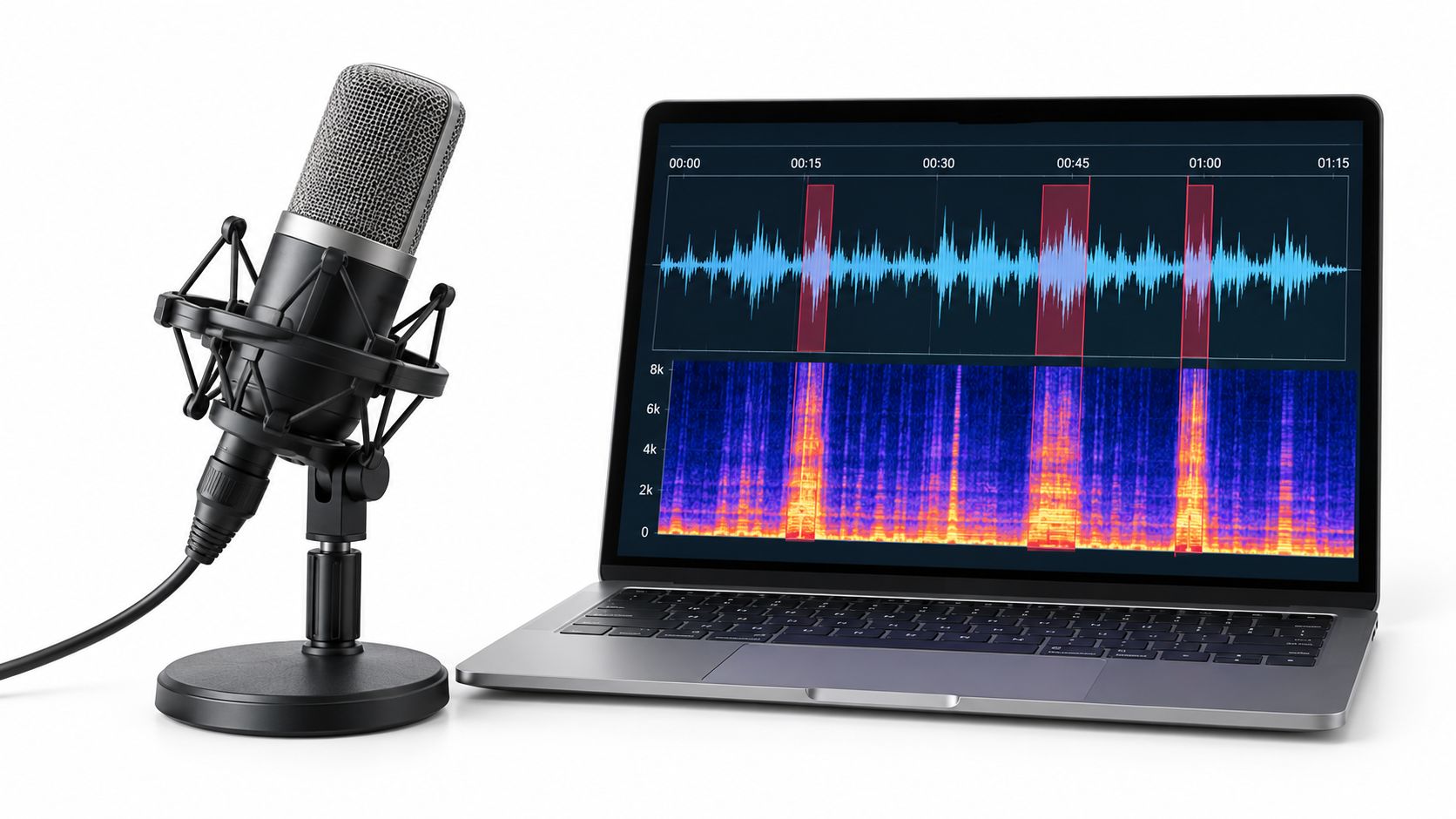
Audio forensics analysis focuses on the sound accompanying a recording. Investigators may examine speech patterns, background noise, compression, metadata, and frequency changes to identify whether a voice or soundtrack has been edited or synthesized. A video may look convincing, yet its audio could reveal inconsistencies.
Consider an animal-training video with narration. A class could ask whether the speaker's voice remains consistent, whether room sounds continue naturally, and whether the recording has passed through several editing or messaging systems. These questions teach students to treat sound as evidence rather than decoration.
Listen before you trust
A journalist authenticating an interview may compare the questionable file with a known recording. A fraud team may investigate a voice message that appears to request urgent action from an executive. In each case, the original file and its surrounding context matter.
Useful classroom questions include:
- Source: Who recorded the audio, and how was the file delivered?
- Comparison: Does a trusted sample reveal meaningful differences in voice or environment?
- Documentation: What format, editing history, and metadata are available?
- Escalation: When should a specialist examine the recording?
The audio forensics software guide can support a lesson on spectral clues and voice authenticity. Students don't need to make a final judgment. They can practice explaining which observations increase or reduce confidence and what additional evidence they would seek.
3. Artifact Detection Technology
Artifact detection technology looks for remnants left behind when software generates or modifies an image sequence. These remnants may appear as strange facial details, inconsistent backgrounds, unnatural edges, or changes between frames. A person may watch the clip without noticing them, while analytical tools can isolate patterns for closer inspection.
The word artifact is useful for students because it connects media studies with archaeology and science. In both cases, an artifact is a trace that helps investigators understand how something was made. A class studying animal footage could pause a clip and ask whether markings, fur, feathers, shadows, or reflections remain stable as the subject moves.
A frame-by-frame classroom prompt
Students can choose one short sequence and compare several moments:
- Details: Do eyes, teeth, claws, or feathers keep a consistent shape?
- Backgrounds: Do branches, fences, or water change in an unexplained way?
- Motion: Does the animal move smoothly, or do nearby objects jump?
- Context: Is the clip supported by a credible caption, location, and original file?
These observations don't prove manipulation on their own. Compression, poor lighting, and ordinary editing can also reduce quality. A responsible conclusion might be, “This clip needs further verification,” rather than “This clip is fake.”
That distinction creates a strong lesson in scientific reasoning. Students learn to identify evidence, acknowledge alternative explanations, and avoid overstating what a single visual clue can establish.
4. Authenticity Verification Protocols
Authenticity verification protocols turn individual checks into a repeatable process. A protocol may define how staff preserve a file, record its source, run automated tools, conduct human review, and report an inconclusive result. The same discipline can support journalism, legal work, school media projects, and enterprise security.
A class can model the process with an animal video found online. First, students record the page and download details. Next, they inspect the footage and audio, compare the caption with visible evidence, and note any edits or uncertainties. Finally, they write a conclusion that distinguishes confirmed observations from open questions.
Build a documented decision
A useful protocol includes:
- File handling: Keep an unmodified copy and label working versions clearly.
- Method records: Note which tools, settings, and model versions were used.
- Human review: Ask another reviewer to examine important findings.
- Escalation: Send ambiguous or high-consequence material to a qualified specialist.
- Reporting: Explain the evidence without presenting a confidence score as absolute truth.
Practical rule: A verification result is stronger when another person can repeat the process and understand how the conclusion was reached.
For independent study, students can design a one-page protocol for wildlife videos. Ask them to include a place for the source, file details, observations, tool results, reviewer comments, and final confidence statement.
5. Advanced Video Forensics
Advanced video forensics examines footage at several levels instead of relying on what appears during ordinary playback. Analysts may inspect individual frames, movement over time, metadata, and encoding behavior. Together, these signals can reveal editing, unusual processing, or gaps in the file's history.
A viral wildlife clip provides a practical example. Students might inspect whether an animal's movement matches the environment, whether shadows change naturally, and whether the caption identifies a plausible location. They can also ask whether the file has been re-encoded by a social platform, since processing can remove useful information and create confusing visual effects.
Preserve first, analyze second
The original file should be preserved before students experiment with copies. An analysis log can include the filename, source, date received, software used, observations, and any transformations made during review. That habit teaches reproducibility and prevents accidental changes from being mistaken for evidence.
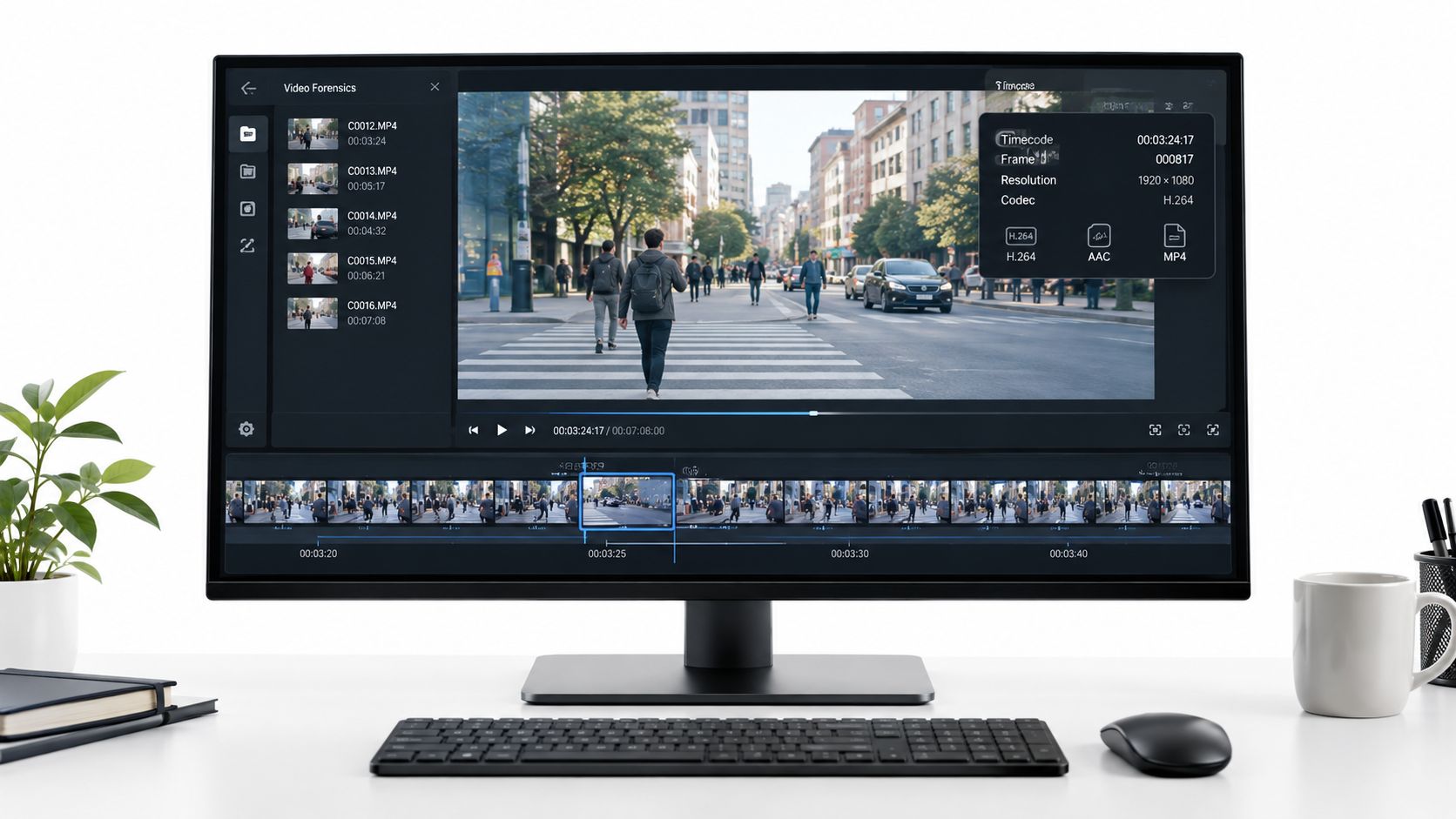
The analysis of video resource can help frame a discussion about frame-level, temporal, audio, and metadata signals. Students can then write a short report explaining why several independent clues are more informative than one striking visual oddity.
Here is a short video element for a lesson extension:
6. Algorithm-Based Detection Methods
Algorithm-based detection methods use computational models to identify patterns linked to synthetic or manipulated content. Machine-learning systems can examine faces, voices, movement, and relationships between frames. Some analyze one signal, while ensemble methods combine several kinds of evidence.
For an animals start with a lesson, students could test a detector with compressed footage of an Antelope herd, one of the animals that start with A. The model may inspect motion, image patterns, or frame relationships, while students compare its result with what they observe. This example helps clarify that an algorithm measures selected features rather than understanding the animal or its habitat.
Ask how the model was tested
Students can evaluate the method by asking:
- Coverage: Which videos, animals, habitats, and sources were included?
- Generalization: Does it work beyond the material used during development?
- Explainability: Can users identify the signals that influenced the result?
- Stability under stress: What happens after compression, cropping, or re-encoding?
- Drift: How will it respond to newer generation techniques?
They can record answers in a comparison table, then use the Antelope clip as a short independent-study exercise. This connects a memorable animal entry with media-literacy questions about evidence and testing.
The DeepfakeBench benchmark is described as a public benchmark containing 34 detectors and 10 datasets, with unified preprocessing and evaluation protocols. It offers a classroom example of how shared testing conditions support fairer comparisons between methods.
7. Automated Content Verification Systems
Automated content verification systems process large volumes of media and route results through preset rules. A platform may screen uploaded clips, a newsroom may sort incoming footage, or an educational service may check recordings before publication. Automation organizes attention, while people still judge context and consequences.
Use an Axolotl, one of the animals that start with a, to make the process concrete. Give students a suspicious clip and an aquatic habitat cue, then ask them to record a memorable fact prompt about the animal before examining the result. The activity keeps the alphabetical reference connected to evidence and media literacy.
Students can route the clip through three decision paths:
- Low concern: Record the result and continue ordinary review.
- Uncertain: Ask another person to inspect the clip and explain the disagreement.
- High consequence: Preserve the file and send it to a specialist before publication or classroom use.
Conflicting evidence should pause the decision until the disagreement is resolved. This resembles a classroom sorting system: clear items follow a known route, while unusual items receive human attention.
Organizations should set these boundaries before deployment and keep an audit trail. The record should show what the system processed, when it ran, and what happened afterward. Students can create a small decision tree or independent-study worksheet, using the Axolotl entry to compare automated classification with their own observations. The lesson demonstrates that speed can organize review without proving certainty.
8. Adversarial Attacks and Evasion Detection
How can a detector identify a manipulated clip when someone has designed it to avoid detection? Adversarial attacks change visual details, remove identifying information, or combine several forms of manipulation. Testing for these weaknesses helps students see why one result cannot settle every authenticity question.
Use a faked clip of an Ape appearing to use tools. Ape belongs on the animals start with a list, so the exercise also supports the article's alphabetical reference. Give students an aquatic habitat cue for an Axolotl as a comparison, then ask them to record one memorable fact prompt about each animal before examining the clip. The habitat detail anchors the vocabulary work, while the suspicious footage introduces media literacy.
Two teams can approach the same file differently. One team alters the Ape clip to hide obvious clues. The other checks visual details, audio, timing, and metadata, then records which changes affect the result.
Students can organize their findings in a simple table:
- Method: What signal did it examine?
- Finding: What changed?
- Confidence: What remains uncertain?
- Next step: What should a reviewer check?
Useful safeguards include independent checks, red-team testing, records of known weaknesses, monitoring of new manipulation methods, and human review for important decisions.
The DF26 study reports that human observers and advanced detectors were close to random chance on its in-the-wild test set. Students can use that finding to discuss why curated benchmarks may not represent social-media-style content.
9. Application Deployment in High-Stakes Environments
Deploying a verification tool in a high-stakes setting means connecting its result to a clear decision process. A wildlife charity, for example, might verify footage of an Aardwolf before publishing it. Aardwolf belongs among the animals start with a, so the example links responsible media use with the article's alphabetical reference. Students can identify the habitat, record a memorable fact prompt, and ask what evidence would support publication.
The same principle applies in newsrooms, legal teams, banks, and security departments. A newsroom may compare breaking footage with eyewitness accounts, location clues, timestamps, and other recordings. Legal professionals may preserve a documented handling history, while a bank may combine automated signals with identity and transaction checks.
Match safeguards to the consequence
A classroom-ready review can use four prompts:
- Authority: Who may request or interpret the result?
- Evidence: Which files and records must be preserved?
- Review: When should a second reviewer examine the case?
- Fallback: What other method can help when the tool is inconclusive?
Students can finish by writing a short decision note that states the setting, possible harm from error, evidence checked, and remaining uncertainty. This activity shows that an application is more than software. Its value also depends on the people, rules, and documentation surrounding its use.
10. Adaptive Learning and Continuous Model Improvement
How can a detection system remain useful as synthetic-media techniques change? Adaptive learning and continuous model improvement allow developers to update models, test new data, review user feedback, and monitor emerging forms of image, video, or voice generation. Without regular testing and revision, a system may become less reliable as the content it examines changes.
Use a named example to make this process concrete. Students can compare original and compressed footage of an Albatross in flight, then examine how lighting, file quality, or narration affects an assessment. The Albatross belongs on the animals start with a list, so the activity also links model evaluation to the article's alphabetical classroom reference.
A model history exercise can work like a scientific lab notebook. Students review an initial method, identify one limitation, and propose a fair test for a future update. They can display their findings in four connected panels:
- Change: What manipulation or weakness prompted the update?
- Test: Which examples will challenge the revised system?
- Result: What evidence shows whether the update helped?
- Decision: Should the system be deployed, revised, or rolled back?
Teams should keep versioned records, test updates before release, document changes, and maintain a rollback plan if a new version behaves unexpectedly. User feedback may reveal confusing results, but reviewers should examine that feedback carefully rather than treat it as proof.
This exercise presents improvement as a cycle of testing, documentation, and responsible review. A detector earns trust by showing how its judgments change over time.
Comparison of 10 A-Starting Detection & Verification Systems
| Item | Implementation complexity | Resource requirements | Expected outcomes | Ideal use cases | Key advantages |
|---|---|---|---|---|---|
| Artificial Intelligence (AI) Detection Systems | High, multi-signal pipelines and real-time processing | GPU inference, model maintenance, moderate compute | Rapid authentication with high multi-vector accuracy | Newsrooms, law enforcement, content moderation, enterprise security | Fast multi-signal detection, privacy-first, reduces misinformation |
| Audio Forensics Analysis | Medium, specialized audio analysis tools and expertise | Audio analysis software, trained analysts, moderate compute | Detects synthetic speech, voice cloning, and compression artifacts | Fraud call detection, interview authentication, voice impersonation cases | Catches audio-only manipulations, independent of video quality |
| Artifact Detection Technology | High, pixel- and frame-level ML models | Large synthetic/authentic datasets, GPU training, frequent retraining | Identifies GAN/diffusion fingerprints and temporal inconsistencies | High-quality deepfake detection, background/manipulation spotting | Pixel-level detection with quantifiable confidence, hard to bypass |
| Authenticity Verification Protocols | Medium, process design plus human review | Staff training, documentation systems, audit trail tools | Defensible records, chain-of-custody, repeatable conclusions | Legal evidence workflows, newsroom verification, enterprise compliance | Legal admissibility, auditability, reduced organizational liability |
| Advanced Video Forensics | High, technical frame-by-frame and metadata analysis | Forensic experts, specialized tools, time-intensive effort | Scientifically rigorous authentication, court-admissible evidence | FBI investigations, litigation, investigative journalism | Comprehensive analysis, reproducible evidence trail |
| Algorithm-Based Detection Methods | High, ML model development and tuning | Large labeled datasets, compute for training and inference | Scalable automated detection that improves with data | Enterprise-scale screening, automated pipelines, research systems | Fast, consistent, scalable detection; improves with more data |
| Automated Content Verification Systems | Medium-High, integration and automation engineering | Processing infrastructure, APIs, monitoring, uptime SLAs | Sub-90s automated scoring, batch processing at scale | Social platforms, news intake workflows, enterprise ingestion | Eliminates verification bottlenecks, real-time decisions, cost efficient |
| Adversarial Robustness and Evasion Detection | High, adversarial defenses and testing protocols | Security experts, additional compute for robustness testing | Reduced false negatives from adversarial attacks, calibrated confidence | High-stakes deployments, red-team assessments, defense-critical systems | Defense-in-depth, resilience to evasion, improved reliability |
| Application Deployment in High-Stakes Environments | High, enterprise-grade integration and compliance focus | Dedicated support, integration teams, ongoing maintenance and training | Reliable, defensible results with regulatory compliance | Law enforcement, courts, banks, mission-critical enterprise use | Legal admissibility, enterprise reliability, reduced liability |
| Adaptive Learning and Continuous Model Improvement | Medium-High, feedback loops and retraining workflows | Ongoing R&D, diverse data pipelines, testing and rollback systems | Sustained detection effectiveness and reduced model drift | Any system facing evolving synthetic media threats | Keeps systems current with new generation methods, reduces drift |
Turn the A List Into Active Learning
A list becomes memorable when students use it. Begin by having learners read the entries aloud, including unfamiliar terms such as artifact, forensics, protocol, and adversarial. Pronunciation practice can lead into vocabulary work, while the repeated letter A provides an easy structure for speaking and writing exercises.
Next, sort the entries into familiar categories. Students might place artificial intelligence detection systems, algorithm-based detection methods, and automated content verification systems under computing. Audio forensics and advanced video forensics fit naturally with media studies. Authenticity protocols and high-stakes deployment open discussions about law, journalism, ethics, and responsibility.
The same method can support animal-focused learning. Ask students to create habitat cards for animals they already know, then compare those cards with the media-verification entries. The contrast is useful: a habitat card describes an animal's environment, while a verification card describes the environment in which people assess information. Both require careful observation and precise language.
Classroom challenge: Choose one entry, explain it without reading the definition, and give a real situation in which a person would use it.
A short research task can extend the lesson. One student might investigate how audio clues differ from frame-level clues. Another could compare automated review with human review. A third could select an animal video, document its source, identify visible and audible evidence, and explain what remains uncertain.
When a video is AI-generated or potentially manipulated, AI Video Detector can help educators examine uploaded content through frame-level, audio, temporal, and metadata signals. The platform is designed for privacy-conscious verification and supports common video formats, with basic detection available without signup according to the publisher's description. It can be useful for checking lectures, training materials, animal footage, or student-submitted media before classroom use.
Detection results should support human review, not replace it. This matters especially when accuracy affects a student's work, a news report, a legal record, or a safety decision. Ask learners to state what the evidence shows, what it doesn't show, and what next step would make the conclusion stronger.
Use this article as a starting card set rather than a final answer sheet. Select one term for tomorrow's lesson, have students build a source-based explanation, and require them to document their reasoning before they share a video or claim with the class.